Why Do You Need Different Types of Industrial Gaskets?
No single gasket material can handle every industrial application. Steam requires different properties than aggressive chemicals. High pressure demands different solutions than food-grade systems. That's why we engineer specific gasket types for specific challenges.
Which Industrial Gasket Type Should You Choose?
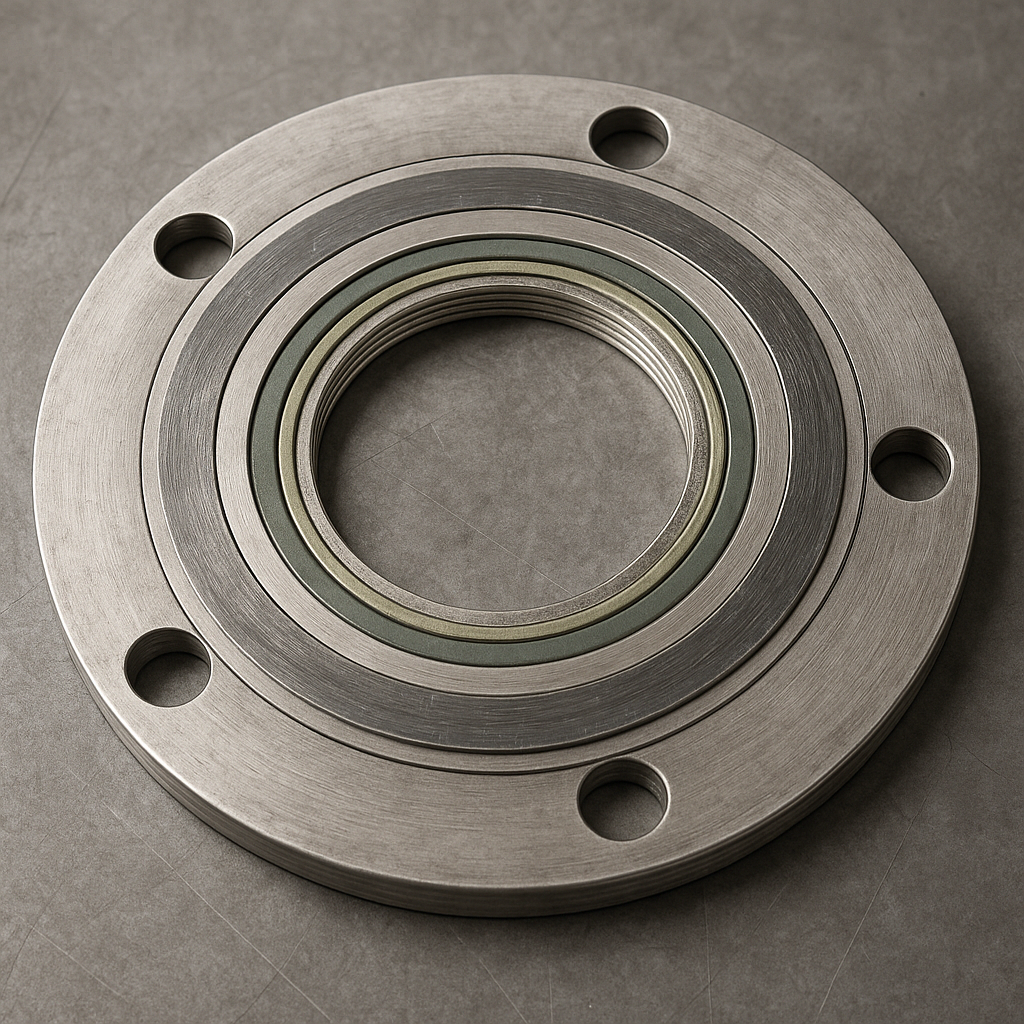
Spiral Wound Gaskets
Best for: Extreme pressure and temperature sealing
- • Manufactured with stainless steel windings and filler materials (graphite or PTFE)
- • Used in refineries, petrochemical plants, and power stations
- • Handle pressures up to 600 bar and temperatures up to 800°C
- • Conform to ASME B16.20 standards
PTFE Gaskets (Virgin & Filled)
Best for: Aggressive chemicals and food-grade applications
- • Chemically inert and FDA-compliant
- • Perfect for pharmaceutical and food processing
- • Temperature range: -200°C to +260°C
- • Available in virgin and glass-filled grades
Compressed Fibre Gaskets (CNAF)
Best for: General-purpose steam, water, and oil applications
- • Versatile and cost-effective
- • Suitable for steam up to 400°C
- • Good chemical resistance to mild acids and alkalis
- • Easy to install and replace
Graphite Gaskets
Best for: High-temperature and high-stress applications
- • Excellent chemical resistance and thermal stability
- • Temperature capability up to 650°C
- • Self-sealing properties under compression
- • Ideal for heat exchangers and steam systems
When Do You Need Custom-Cut Gaskets?
Standard gasket sizes don't always fit non-standard equipment. Custom-cut gaskets solve this problem by providing exact dimensions for your specific application.
💡 Custom Solutions Available:
- • Any material, any shape, CNC or die-cut to exact specifications
- • Short lead times with full material traceability
- • Prototyping services for new designs
- • Volume production capabilities
How to Select the Right Gasket Material?
| Application | Recommended Gasket | Key Benefit |
|---|---|---|
| High pressure steam | Spiral Wound | Extreme pressure/temperature capability |
| Aggressive chemicals | PTFE | Chemical inertness |
| Food processing | FDA-grade PTFE | FDA compliance |
| General steam/water | CNAF | Cost-effective reliability |
Frequently Asked Questions About Industrial Gaskets
Q: How do I know which gasket thickness to use?
A: Gasket thickness depends on flange surface finish and bolt load. Rough surfaces need thicker gaskets, while smooth RTJ flanges use thin metallic gaskets. Our engineers can specify the optimal thickness for your application.
Q: Can I reuse industrial gaskets?
A: Generally no. Most gaskets are designed for single-use as they compress and deform during installation. Reusing gaskets can lead to leakage and safety issues. Only some metallic gaskets can be reused if undamaged.
Q: What's the difference between spiral wound and camprofile gaskets?
A: Spiral wound gaskets use a continuous metal strip wound in a spiral with filler material. Camprofile gaskets have a metal core with facing materials on both sides. Spiral wound are better for extreme conditions, while camprofile are more forgiving on imperfect flanges.
Q: How quickly can you supply custom gaskets?
A: Lead times vary by complexity, but we typically deliver custom-cut gaskets within 5-10 working days. Emergency services available for critical applications with 24-48 hour turnaround possible.
⚠️ Expert Warning: Installation Critical Points
Proper gasket installation is crucial for performance. Never exceed recommended bolt torque, ensure flange surfaces are clean and undamaged, and always replace gaskets during maintenance. Over-tightening can damage both gasket and flange.
About the Author
Andrew Sykes MCGI has 36 years of hands on experience in mechanical seal design, manufacturing, and gasket application engineering. He specialises in material selection and sealing solutions for challenging industrial environments.