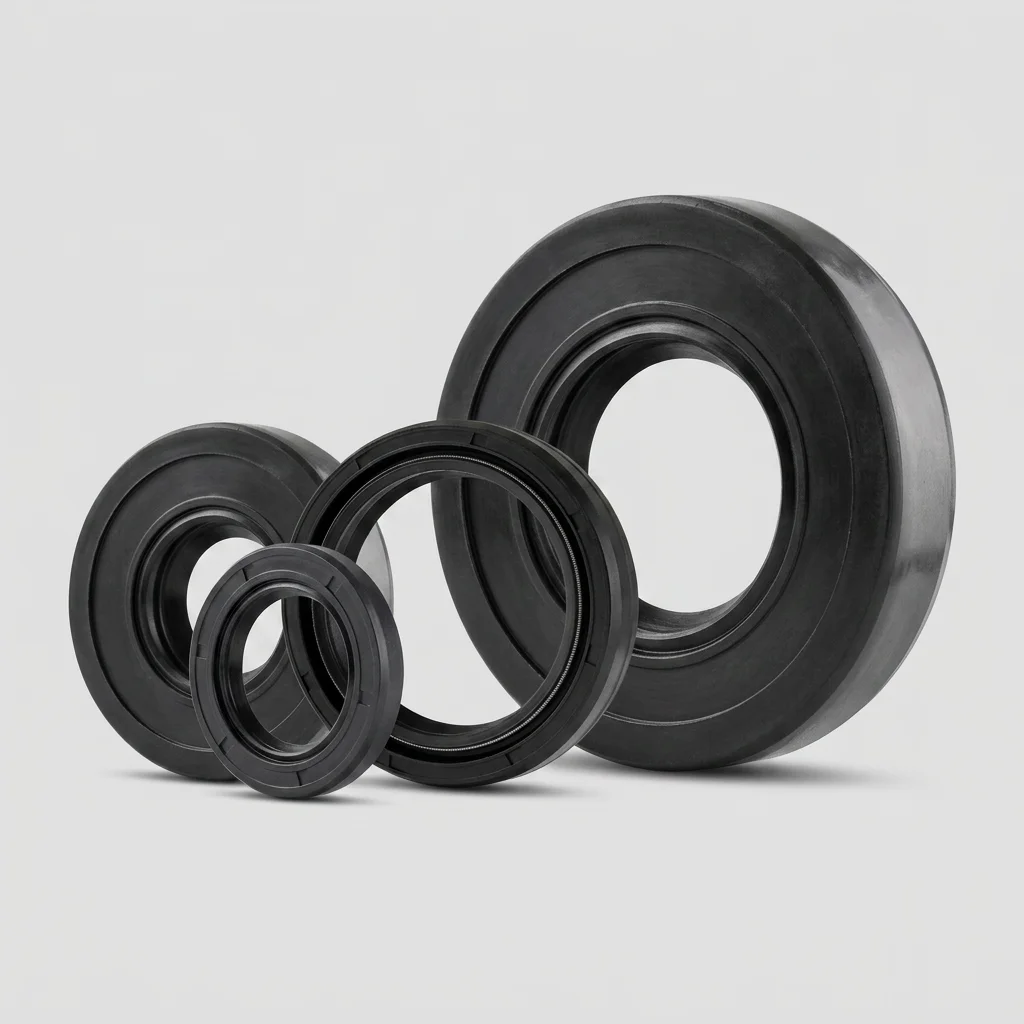
Lip Seal or Oil Seal? What the Difference Actually Means
Lip seal, oil seal, rotary shaft seal, radial shaft seal. Four names for what is usually the same component, and a lot of confusion when you are trying to order the right part.
Here is the plain answer, followed by the questions engineers ask me most often.
Is a lip seal the same as an oil seal?
In everyday workshop language, yes. A lip seal is any seal that works by pressing a flexible elastomeric lip against a moving surface. An oil seal is a lip seal used to retain lubricant on a rotating shaft.
The technical name is a radial shaft seal. The catalogue name is usually an oil seal. Engineers on the floor call it a lip seal. Same part.
The distinction only matters when the application is not about oil. If you are excluding dust rather than retaining lubricant, you want a dust lip or a wiper, and that is a different profile.
How a lip seal actually works
Three things do the sealing, and all three have to be right:
- The lip itself. A thin elastomeric edge, moulded to a precise angle, riding on the shaft with a contact width of a fraction of a millimetre.
- The garter spring. A small coil spring behind the lip that maintains radial load as the elastomer relaxes and the lip wears.
- The shaft surface. Wrong finish and the seal will leak no matter how good it is. Aim for 0.2 to 0.8 micrometres Ra, plunge ground, with no machining lead.
Most oil seal complaints I look at are not seal problems. They are shaft finish problems.
What size do I need?
An oil seal is specified by three dimensions, always in this order:
Shaft diameter x bore diameter x width. For example 35 x 52 x 7.
Measure the shaft with a micrometer, not a rule. Measure the housing bore, not the old seal, because a compressed outer case will read undersize. If the old seal has a part number stamped on the case, send me a photo of it and I will match it.
Which material?
- NBR (nitrile). Minus 30 to 100 C. Mineral oils, general purpose, lowest cost.
- HNBR. Minus 30 to 150 C. Higher temperature, better wear resistance.
- FKM (Viton type). Minus 20 to 200 C. Hot oils, fuels, many chemicals.
- PTFE. Minus 50 to 200 C plus. Dry running, high speed, aggressive chemistry.
- Silicone. Minus 50 to 180 C. Dry heat, low speed, food contact grades.
If you do not know the fluid temperature at the seal face rather than in the tank, assume it is higher than you think. Heat generated at the lip is a real contributor.
Why does my new oil seal still leak?
Six causes account for nearly all of them:
- Shaft wear groove. The old seal cut a track. A new seal in the same axial position sits straight in the groove. Fit the replacement a few millimetres deeper, or use a shaft repair sleeve.
- Poor shaft finish. Too rough and the lip abrades. Too smooth and the lubricating film cannot form. Both leak.
- Machining lead. A shaft turned rather than plunge ground has a spiral pattern that pumps oil out from under the lip.
- Fitted dry or damaged on assembly. The lip must be lightly oiled and protected past keyways and splines.
- No pressure relief. A standard lip seal is not a pressure seal. Above roughly 0.5 bar you need a pressure rated profile, and a blocked breather will exceed that quietly.
- Wrong material for the fluid. Nitrile in hot synthetic oil hardens, loses lip contact, and leaks within months.
Can a lip seal hold pressure?
Only a little. A standard rotary shaft seal is designed for near atmospheric conditions. Pressure rated designs with a supported lip will handle several bar at reduced surface speed, but if you have real pressure and real speed together, that is a mechanical seal application, not a lip seal one.
Lip seal or mechanical seal?
Use a lip seal where you are retaining lubricant on a shaft at low pressure: gearboxes, bearing housings, electric motors, drive ends.
Use a mechanical seal where you are sealing a process fluid under pressure: pumps, mixers, agitators. Lip seals in those duties leak, and usually onto something that matters.
Getting it right first time
Send me the shaft diameter, the bore, the width, the fluid, the temperature and the shaft speed. That is enough to specify the seal correctly and, more usefully, to tell you whether the last one failed because of the seal or because of the shaft.
We supply oil seals and rotary shaft seals across the UK, with same day despatch on common sizes ordered before 2pm.
Andrew Sykes MCGI, 36 Years Solving Seal Problems
Need a size matched or a failure explained? Contact Acumen Seals.
Solutions related to this article
If this failure mode sounds familiar, these are the products and services that usually fix it.
- Component SealsSeal faces, springs, bellows and secondary seals in carbon, silicon carbide and tungsten carbide.View details
- Cartridge SealsPre assembled seal units that remove setting errors on pumps, mixers and agitators.View details
- FFKM O-RingsPerfluoroelastomer O-rings for aggressive chemistry and temperatures to 325C.View details
Experiencing a Seal Failure?
Get expert advice and fast solutions from Acumen Seals & Pumps. With 36+ years of experience, we solve seal problems quickly and efficiently.
Founder and Mechanical Seal Specialist, Acumen Seals & Pumps
Published on 2026-09-07
45 years in engineering and 36 years in sealing. Andrew specifies, supplies and troubleshoots mechanical seals, FFKM elastomers and pump sealing systems for UK industry.
More about Andrew