
Not sure which mechanical seal you need?
Send us clear photos and the pump details. We will help check what is needed for a replacement quotation.
Chemical pump seal conversions


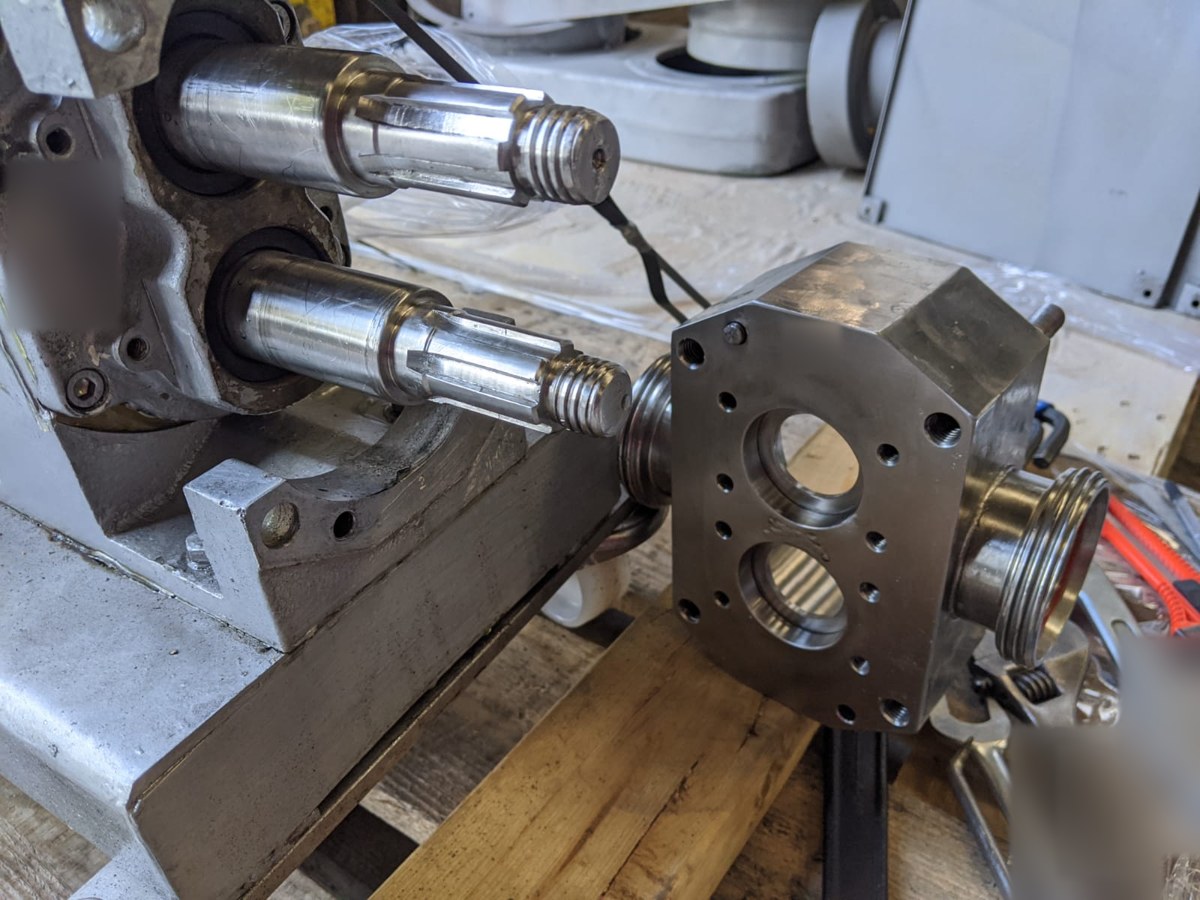
Seals fitted to rotary lobe pumps


1. Show us the seal
- Take clear front and side photos of the whole seal.
- For a component seal, show the rotating head and stationary seat separately, where safely available.
- Show the shaft or sleeve where the seal sits and the housing it fits into.
- Send any old part number or drawing, plus the pump make and model.
Keep it safe
Removal and measuring should be done by a suitably qualified person on isolated, safe equipment. For a cartridge seal, keep the assembly and its setting parts together.
2. Tell us the measurements
Start with the shaft or sleeve diameter at the seal location. Add the stationary seat outside diameter and thickness, the housing space and the working length, where available.
Send a clear photo of each measurement. Say which part is being measured and use millimetres. Do not guess a missing size.
3. Tell us the duty
- What liquid is being pumped, including solids.
- Operating temperature, pressure and speed.
- What happened to the old seal and when it started leaking.
A similar-looking seal may not be right
A photograph alone does not prove fit or suitability. Worn or damaged parts may no longer show their original size. Dimensions and operating conditions need checking together.
Send the details for a quotation
Email your photos, measurements and pump details to office@acumenseals.co.uk.
If the part number has gone, do not order by the outside appearance of the spring. Start with the machine and the surfaces the seal fits against.
Dimensions tell us what can fit. The fluid, temperature, pressure, speed and any solids tell us what should be fitted. Send both sets of information before asking for a replacement.
What measurements do you need first?
Start with the shaft or sleeve diameter where the seal actually runs. If a sleeve is fitted, measure that surface rather than the bare shaft underneath it. Record the seal chamber bore and depth, gland recess and axial space available.
For a component seal, record the stationary seat dimensions required by its drawing, including outside diameter and thickness where applicable. Record the installed working length of the rotating seal, not just the free length of its spring. Note any drive pins, slots, keys, rubber cup or O ring that locate the parts.
Do not rely on a damaged part alone. Compare measurements with the shaft, sleeve, housing and the manufacturer's drawing where available. Do not force a catalogue match because the photograph looks similar.
Which photographs should I send?
Send a clear photograph of the whole seal and separate views of the rotating head, stationary seat and any markings. Put a ruler beside the part where useful, but provide measured dimensions as well. Include a photograph showing how the seal sits in the pump if it is available.
For a cartridge seal, keep the assembly and its setting parts together. Follow its manufacturer's instructions before dismantling it.
Send the pump make and model, fluid, temperature, pressure and speed with the measurements. A seal that fits the shaft can still be wrong for the duty.
Related: Seal Selector Tool and What should I send to identify an unmarked or obsolete seal?.